

Metisa plana: A Destructive Oil Palm Pest
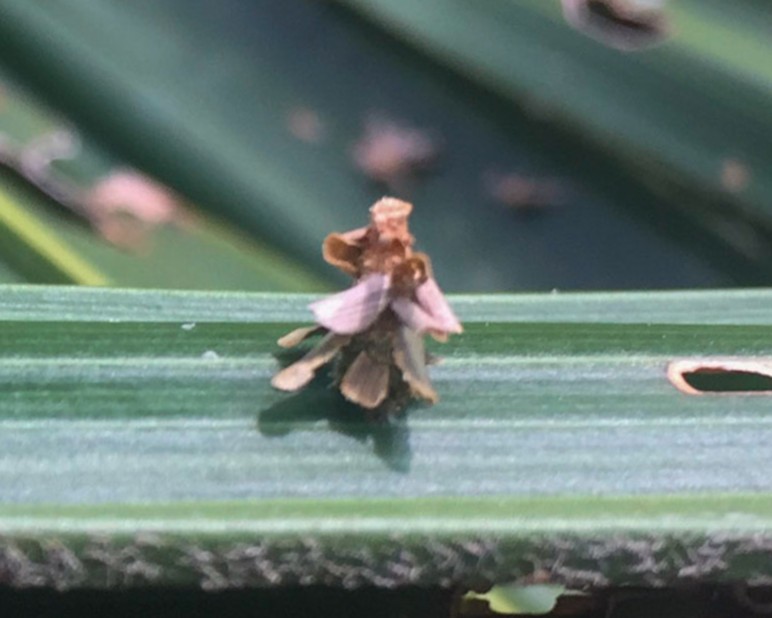
Metisa plana (Lepidoptera: Psychidae), commonly known as the bagworm, is the most serious and dominant defoliating pest of oil palm in Peninsular Malaysia — ahead of related psychids such as Pteroma pendula and Mahasena corbetti — and a recurring threat throughout Southeast Asia, particularly in Malaysia and Indonesia. It takes its name from the portable, spindle-shaped case that each larva constructs from silk and fragments of host leaf, carrying and enlarging this protective bag as it grows and eventually pupating within it.
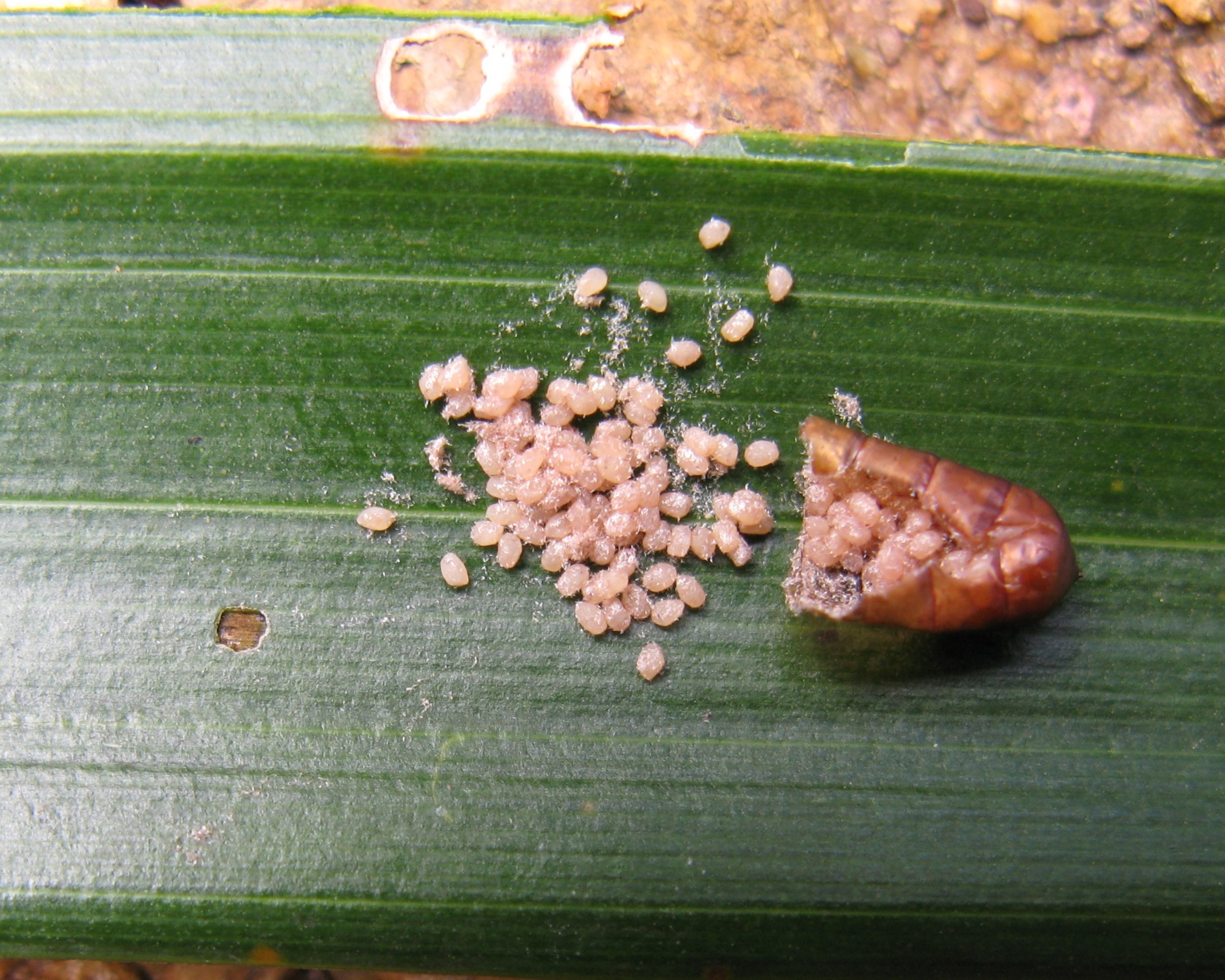
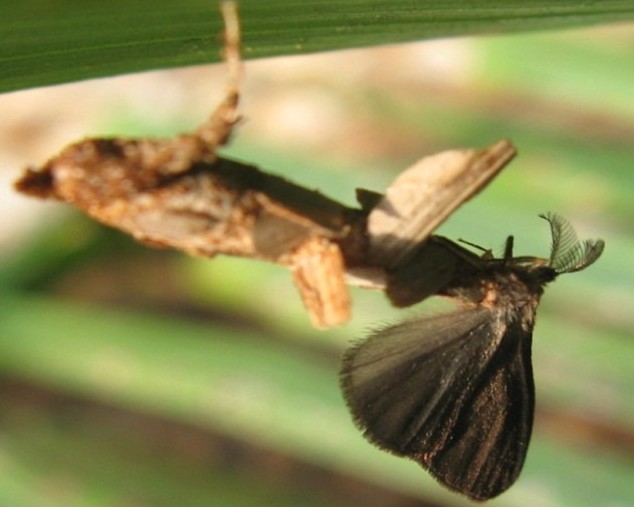
The insect completes its egg-to-adult development in roughly 100 days and passes through up to seven larval instars, with no distinct breeding season — populations reproduce continuously throughout the year. It is strongly sexually dimorphic: males emerge as small, fully-winged moths, whereas the neotenic females remain wingless and larva-like within their bags, where a single female typically lays around 200 to 300 eggs. Coupled with continuous, year-round breeding, this allows populations to build up rapidly whenever conditions turn favourable, driving the sudden, large-scale outbreaks for which the species is notorious.
Damages to the Oil Palm Industry
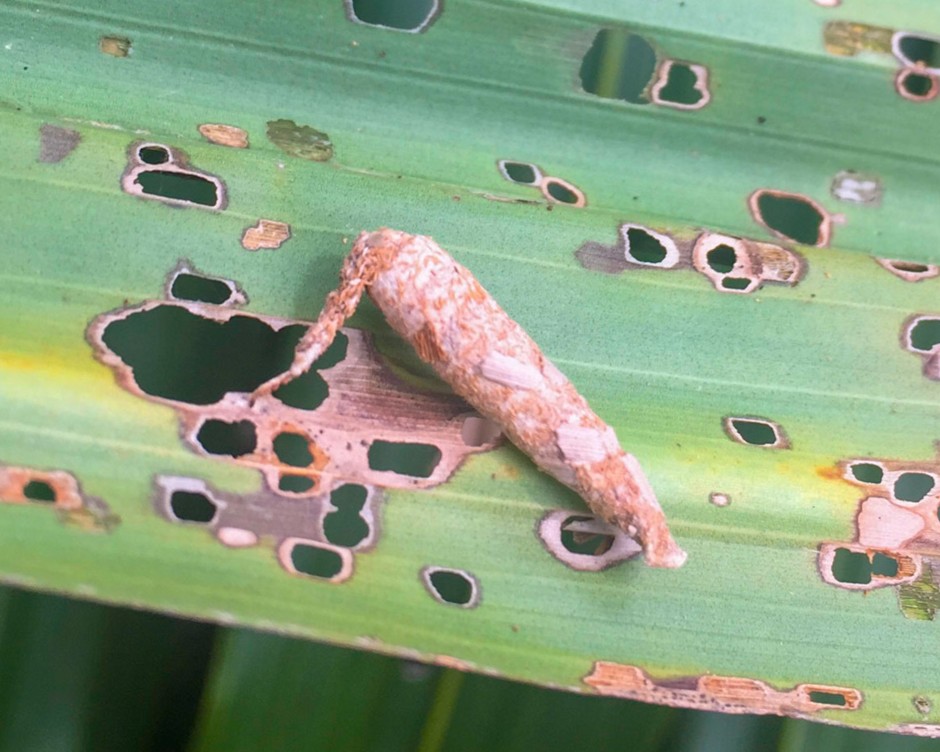
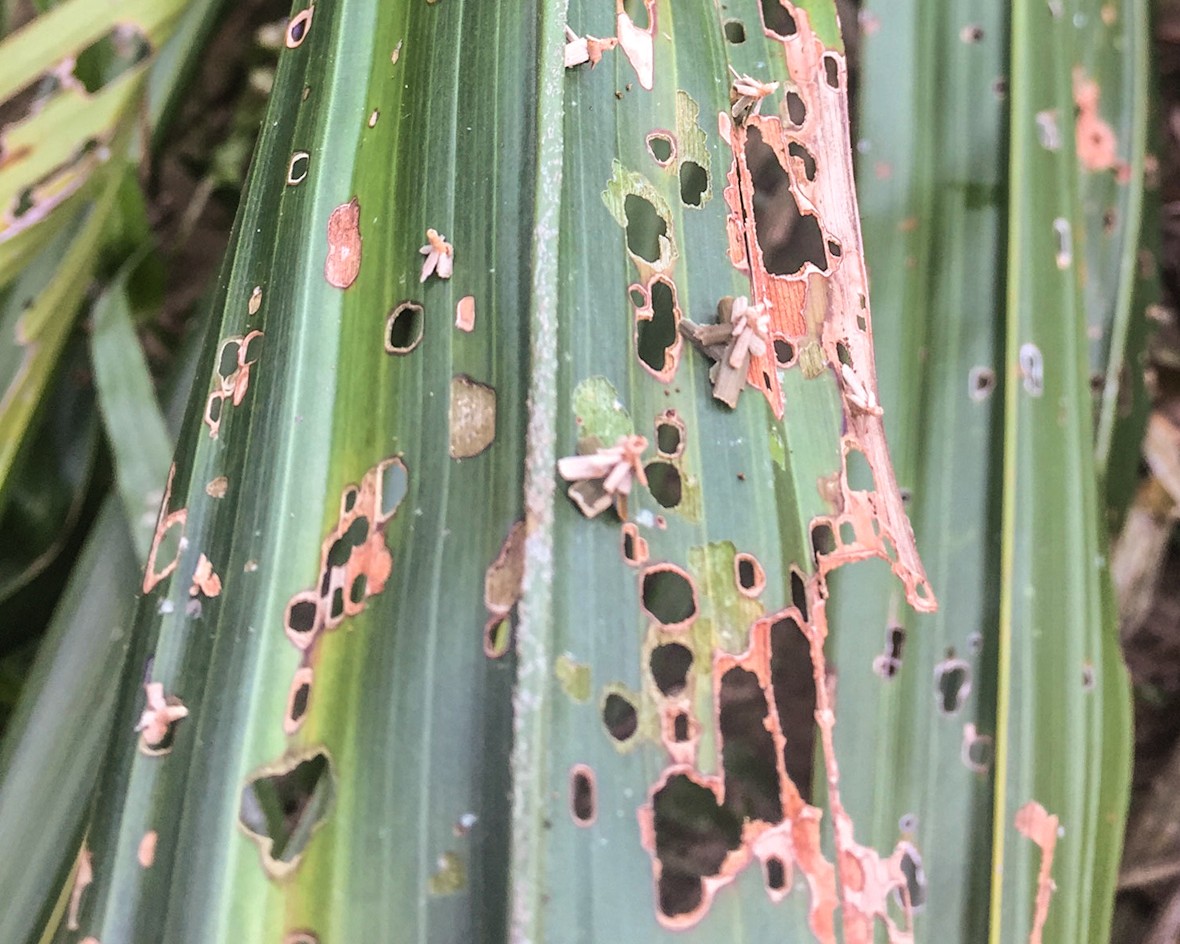
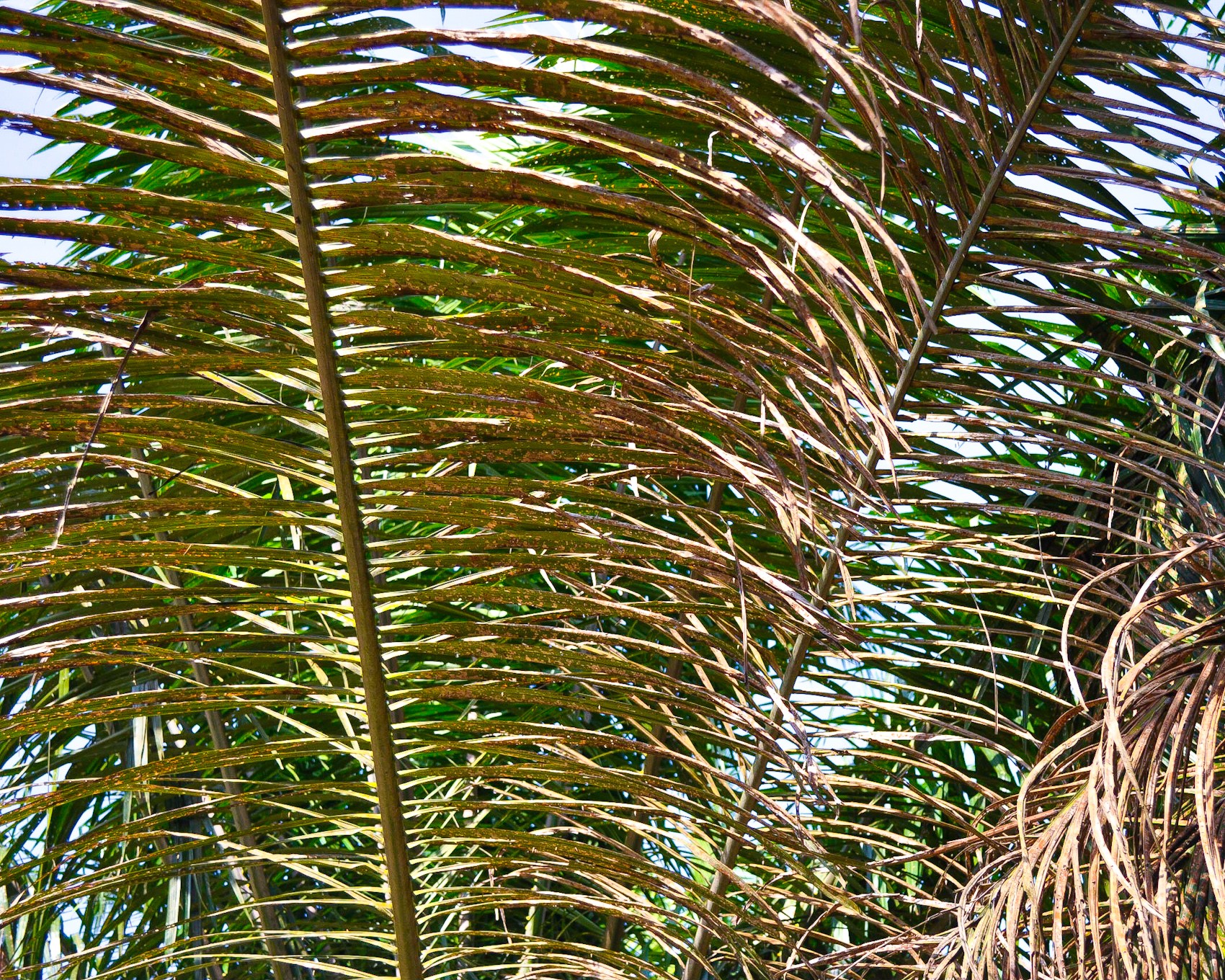
The damage is caused primarily by the larval stage. Larvae graze on leaflets, scraping off the epidermis and feeding on leaf tissue, leaving behind characteristic skeletonized scar patterns. Under outbreak conditions, severe defoliation of oil palm fronds can occur rapidly. Such outbreaks are a chronic problem in the region: M. plana was officially declared a dangerous pest in Malaysia in 2013, and by 2018 infestations had spread across more than 30,000 hectares, predominantly affecting smallholders. This loss of foliage decreases the tree's photosynthetic capacity, causing:
- Drastic reduction in Fresh Fruit Bunch (FFB) yields, causing up to 40% to 50% crop loss in subsequent harvest years.
- Compromised palm tree health, leading to leaf necrosis, stunted growth, and susceptibility to secondary diseases.
- Heavy financial losses for both smallholders and commercial plantations.
Challenges in Pest Management
Managing M. plana outbreaks is notoriously difficult due to several ecological and biological factors:
- Physical Protection: The protective bag constructed by the larva acts as a physical barrier against chemical contact insecticides, decreasing spray efficacy.
- Continuous Breeding: Female moths are wingless and remain inside their bags, each laying around 200–300 eggs; with no distinct breeding season the pest reproduces year-round, allowing populations to build up rapidly under favourable dry weather.
- Secondary Outbreaks: Broad-spectrum chemical spraying often decimates natural predators and parasitoid wasps (e.g. Dolichogenidea metesae), causing insecticide resistance and secondary pest flare-ups.
- Need for Molecular Alternatives: There is a critical, urgent need to develop targeted, bio-rational pesticides (such as RNA interference, peptide toxins, or pheromone disruptors) to control outbreaks without disrupting biological control agents.
Life Cycle & Field Damage
MplanaBase Features & Molecular Resource Deck
MplanaBase is an integrated genomic, functional, and structural bioinformatics database developed to support researchers investigating the molecular biology of Metisa plana. By providing structured, richly-annotated resources, it aims to accelerate research into pest physiology, detoxification pathways, and novel molecular control targets.
Gene & Protein Registry
Searchable catalogue of Metisa plana gene models, exon configurations, and genomic coordinates, paired with a companion protein registry. Seamlessly aggregates BRAKER-compatible GFF3 and GTF annotations.
Protein Structure Hub
Interactive 3D structures modelled via ColabFold (AlphaFold2) for nearly the entire proteome, allowing users to inspect fold configurations, per-residue pLDDT confidence, and pTM scores directly in the browser.
Functional Annotation Deck
Comprehensive mapping of proteins to InterPro and Pfam domains (with canonical InterPro entry names and types), Gene Ontology (GO) terms, KEGG pathways, enzyme (EC) classes, subcellular localization, transmembrane helices, and SignalP signal-peptide predictions.
BLAST Homology Search
Direct sequence alignment interface allowing BLASTP (protein vs protein) and BLASTX (translated nucleotide vs protein) homology queries against the local assembly, complemented by a curated deck of prioritised pest-control target candidates.
JBrowse 2 Linear Genome View
Visual linear browser enabling researchers to slide along genomic scaffolds, view gene structure tracks, zoom to base level, and examine gene models in context across both the nuclear and mitochondrial genomes.
Database Contents & Statistics
MplanaBase integrates 248,476 domain and 408,811 Gene Ontology annotations across all 28,738 predicted proteins, alongside homology, pathway, enzyme and structural data.
Genome & Gene Models
Functional Annotations
Comparative Gene-Family Expansion
Orthogroups inferred with OrthoFinder across Metisa plana and five relatives — the fellow bagworm Eumeta variegata, the pests Plutella xylostella, Spodoptera frugiperda and Manduca sexta, and Drosophila melanogaster as an outgroup. Because only Metisa is domain-classified into families, the orthogroups provide the common yardstick for comparing repertoire sizes across all six species. Families where Metisa holds the largest count (🔺) mark lineage-specific expansions — most notably the detoxification superfamilies central to insecticide resistance.
Each value = genes a species places in the orthogroups that contain Metisa's members of that family — an orthogroup-level count that also includes close paralogs, so it can exceed the curated family size (e.g. Metisa's P450 orthogroups hold ~200 genes vs 148 domain-classified P450 proteins). Click a blue Metisa value to browse that family's curated proteins.
Loading comparative data…
Values are orthogroup gene counts (a cross-species-comparable proxy), not curated per-family counts; the linked family list may therefore be smaller than the number shown. Metisa's larger overall gene set may also slightly inflate its column.
Research Group & Principal Investigator

Ts. Dr. Nor Azlan Nor Muhammad
Research Fellow & Lecturer
Institute of Systems Biology (INBIOSIS), Universiti Kebangsaan Malaysia (UKM)
Dr. Nor Azlan Nor Muhammad (PhD in Bioinformatics, University of Melbourne) leads the computational biology and omics integration pipelines at INBIOSIS, UKM. His research group focuses on leveraging computational biology and next-generation sequencing (NGS) technologies to investigate biological networks, pest genomics, and metabolic configurations.
Research Focus:
- Agricultural Genomics: Genomic, transcriptomic, and proteomic profiling of key tropical pests, including the bagworm (Metisa plana) to define target sites for bio-rational pesticides.
- Multi-Omics Integration: Classifiers integrating transcriptomics, metagenomics, and clinical biomarkers to trace biological pathways.
- Database & Software Curation: System architect of PCOSBase, SuCComBase, and Mplanabase.